The AI transformation
Artificial intelligence is transforming many sectors of our economy, changing how much we can produce and the tasks people do at work. But we don’t yet know all the ways AI will affect the economy.
Never miss an article from Bank of Canada when you sign up for email alerts.
September 18, 2026
Artificial intelligence (AI) can plan your next trip or suggest a recipe based on the ingredients you already have at home. And there’s been a lot of buzz about AI being the next general-purpose technology—or GPT.
What is a GPT
A GPT is an innovation that affects nearly every sector of the economy and reshapes how people work. GPTs also spur other innovations that build on their transformative potential. The internet is one example. It made it possible to send and receive large amounts of information and communicate instantly with people around the world. It also gave rise to all kinds of other innovations such as search engines, social media and e-commerce.
But the most significant applications of a GPT usually come decades after the new technology is introduced. Although AI is already improving efficiency in many tasks, we don’t yet know how it will change the economy. The most transformative effects of AI likely still lie ahead.


These days, computers are everywhere. In your mobile phone, your rideshare and even in children’s toys. It’s hard to even find a new home appliance without some kind of small computer. But it hasn’t always been this way. The modern computer was invented in the 1940s, and since then, computing has become a part of just about everything we do. Computers are a general purpose technology—or GPT for short. GPTs are technologies that fundamentally change how the entire economy works. They spur all kinds of other innovations—things that didn’t even exist before the GPT was invented. And the computer has done that in spades. Check out some of the many innovations that grew out of the modern computer.

Modern computers
The first modern computers were built in the 1940s, launching a technological transformation that is still unfolding today.

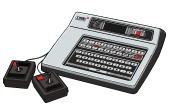
Video games
The first video game system, the Magnavox Odyssey, was released in 1972. It was the start of a new industry that now brings hundreds of billions of dollars per year.

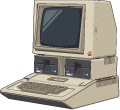
Personal computers
The first personal computers hit the market. The release of the Apple II in 1977 helped popularize home computing.


Digital cameras
The first digital cameras were sold in the 1980s. Digital cameras eliminated the market for camera film, but would later become an integral part of smartphones.


Cell phones
The first cellular phone was released by Motorola in 1984. Called the Dynatac 8000x, it was bulky and very expensive.


The world wide web
In 1989, the world wide web was invented as a way for researchers at the European Organization for Nuclear Research (CERN) to share information with each other. Soon after, companies began launching web pages.


E‑commerce
E‑commerce companies like Amazon and eBay were founded in the 1990s. Online shopping has grown a lot since then. Today, it’s a multi‑trillion dollar industry.


Social media
Social media giants Facebook, Twitter and YouTube were founded in the 2000s. Social media has changed the way people interact with each other and consume information.


Smartphones
Smartphones gave us new ways of doing business and processing information in the 2000s. From the app store to "tap‑to‑pay", they have created new economic niches.


Smart appliances
Wi‑fi connected smart appliances became popular in the 2010s, making our homes more efficient and tailored to individual preferences.


Automated vehicles
The first commercial automated vehicle fleet launched in the United States in the late 2010s, navigating roads using a combination of sensors and computing power.


Generative artificial intelligence
In November 2022, OpenAI released ChatGPT, a large language model. The buzz around the technology has hardly slowed down since. But only time will tell if generative AI is a general purpose technology in its own right, or only one of many innovations that are part of the technological revolution spurred by the computer.


The tree continues...
As these technologies evolve, they potentially lay the foundation for the next generation of breakthroughs.
AI could increase productivity and raise living standards
Some people think that AI will usher in an age of abundance by helping us produce more with the same amount of effort. If AI raises productivity, it could improve our standard of living by increasing the supply of goods and services, which helps keep prices low. And when labour productivity goes up, the economy can grow more quickly without causing inflation.
But we don’t know when the biggest productivity gains from AI will happen or who will benefit from them the most. There is already some evidence that AI is saving time for workers and businesses. At the same time, large technology companies such as Google, Microsoft and Meta are making large-scale investments in AI infrastructure, and this is helping drive economic activity, primarily in the United States.
New technologies take time to transform the economy
New technologies do not transform the economy overnight. It takes time for people and businesses to figure out how to use them effectively, and the first applications aren’t usually the most transformative.
That’s the way it was with the internet. Early versions of it existed as far back as the 1960s, but it was mostly used by the military and by researchers at universities.1
Then, in the 1990s, the world wide web came along, and businesses started to get in on the action.2 Many companies built their own websites, but most of them weren’t actually making money from them yet. People knew the internet would be transformative, but they hadn’t figured out how to use it for profit. It wasn’t until the late 1990s and early 2000s that many of the largest social media and e-commerce companies were founded, and the digital economy we now know began to emerge.
AI could follow a similar path to the web. Companies are still learning how to use this transformative new technology, and the businesses that use it best might not even exist yet.
How AI could affect jobs
When new technologies are introduced, people often worry about how they will affect jobs. In the short term, new technologies can be disruptive, and some jobs may be affected as tasks are automated or changed. But over the long run, the economy adjusts. New jobs are created by increased demand and the creation of new tasks. New technologies have often created more jobs than they displaced. They have also helped improve living standards by increasing productivity and enabling new goods and services.
Consider the rise of electricity. Many candle makers were put out of work by the light bulb, and lamp lighters were no longer needed when electric streetlights were installed. But electricity helped spur many other innovations. Electrification made factories more productive, and electric appliances such as dishwashers and microwaves made everyday tasks easier. Other technologies—including radio, television and computers—also depend on electricity. These developments created entirely new industries, even as some existing ones declined.
Transformative new technologies often follow a similar pattern. But is AI different? Maybe. Many new technologies that came before AI mainly automated routine tasks. But AI can go further. Systems driven by AI—for example, large language models (LLMs) such as ChatGPT or Claude—can help you write an email on virtually any topic or synthesize large volumes of data into a neat and tidy summary. And they can do it almost instantly.
AI can do many tasks, but few jobs
AI systems such as LLMs can perform a wide range of tasks. But they cannot do many jobs from start to finish. These systems are prone to “hallucinations” and can produce information that is incorrect, fabricated or weirdly non-sensical. AI can be wrong—or only half right. As a result, the technology needs human oversight, guidance and judgment to be used effectively.
Even so, AI can improve how work is done. By making repetitive and routine tasks more efficient, it can allow people to focus on higher-value work such as planning and analysis. It’s a revolutionary technology with the potential to transform the economy. But the scale of the transformation will depend on many different factors, such as how quickly it is adopted and how widely it is used.
Whatever happens, we’ll be closely watching the effects of AI on the economy. Our job is to support the economy through the transition and keep inflation at or around 2%. When inflation is at that level, it helps people and businesses plan for the future, whatever it might hold.
This article is part of a series on how changes in technology, demographics and international trade are transforming the Canadian economy. The Bank of Canada can’t offset the effects of these changes. But, by keeping inflation low, stable and predictable, we can support the economy as it adjusts.
We want to hear from you
Comment or suggestion? Fill out this form.
Questions? Contact us.
- 1. Science Museum, “From ARPANET to the Internet,” (November 2, 2018).[←]
- 2. CERN, “A short history of the Web,” (n.d.).[←]