Global trade is changing how the Canadian economy works
Tariffs and other trade barriers are changing where goods are produced

Global trade is changing how the Canadian economy works
Never miss an article from Bank of Canada when you sign up for email alerts.
September 24, 2026
International trade benefits the Canadian economy, but changes to our trade relationships are now forcing businesses to adjust to a new reality.
International trade is central to Canada’s economy. Trade has made Canada a more prosperous place to live by allowing Canadian companies to:
- Export their products all over the world. Because Canada has a relatively small population, exporting to other countries gives Canadian companies access to more customers, and the added demand for their products creates jobs in Canada.
- Import goods and services made elsewhere. This gives businesses and consumers access to a wider range of products.
Trading goods with other countries:
- helps keep prices lower by letting countries specialize in what they can produce more efficiently
- gives Canadians access to products we don’t produce here, such as coffee beans or bananas
- creates competition, which encourages Canadian companies to keep prices low
Canada built its international trading relationships over many decades, during a long period when countries reduced barriers and expanded trade. This supported our economic growth. But now, international trade is changing. New tariffs and other barriers are changing how goods and services are produced and traded. These changes are creating new challenges for Canadian businesses and workers, and they will have a lasting effect on how our economy functions.

The Blue Water Bridge links Port Huron, Michigan to Sarnia, Ontario. It connects major highways in the United States and Canada and serves as a critical trade corridor with over 2.1 million commercial trucks crossing annually.
Trade between Canada and the United States changed suddenly
Canadian companies do business all over the world, but the United States is our biggest trading partner by a wide margin. We sell more goods and services to the United States than to all other countries combined. For Canada, trading with the United States has built-in advantages, including:
- the size of the US economy—the world’s largest
- the proximity of the United States to Canada
- a shared language (English)
- a similar business environment
In early 2025, the United States began imposing tariffs on many Canadian-made products. These tariffs were a sudden shift in our trading relationship and raised the cost of buying Canadian-made goods for US companies and consumers.
A tariff is a tax on an imported good or service. Businesses often respond to tariffs by changing where they produce goods and services and who they buy them from. Companies may choose to produce more domestically or switch to suppliers in other countries that are subject to lower tariffs.
These adjustments can reduce demand for Canadian exports. For example, a US company may buy an American-made product instead of a Canadian one, leading to lost sales for the Canadian business. When there is less demand for Canadian products, it can mean fewer jobs and less economic activity. Over time, this can weigh on growth. Businesses may invest less, and the economy’s ability to produce goods and services may stagnate.

How Canadian businesses are adapting
Canadian businesses are adapting. Some companies are changing their suppliers and some are investing in new technologies that can help cut costs and improve resilience.
Many exporters are looking for customers in new markets and emphasizing opportunities outside the United States to reduce dependence on a single market.”
But some sectors of the economy are better positioned to adapt than others. Agricultural products, mineral resources and energy are in demand all over the world. Companies in these sectors can often find buyers in other countries. In contrast, companies that produce manufactured goods often have more difficulty finding new customers elsewhere. Competition in manufacturing can be fierce, and some countries have lower labour costs or significant government subsidies. Even for businesses able to find new customers, building new business relationships abroad takes time and effort.
US trade actions have hit some sectors of the economy hard. The automotive, steel, aluminum and lumber industries have all suffered. Uncertainty about the future of the US-Canada trade relationship is weighing on economic activity overall, but many trade-related sectors have not been as affected as initially feared. This is largely because the Canada-United States-Mexico Agreement (CUSMA) protects many Canadian goods and services from tariffs. Companies and consumers on both sides of the border have benefitted because tariff-free trade helps keep prices low. But there is uncertainty about how CUSMA will evolve. As long as this uncertainty remains, companies may continue to rethink where they produce and who they buy from.
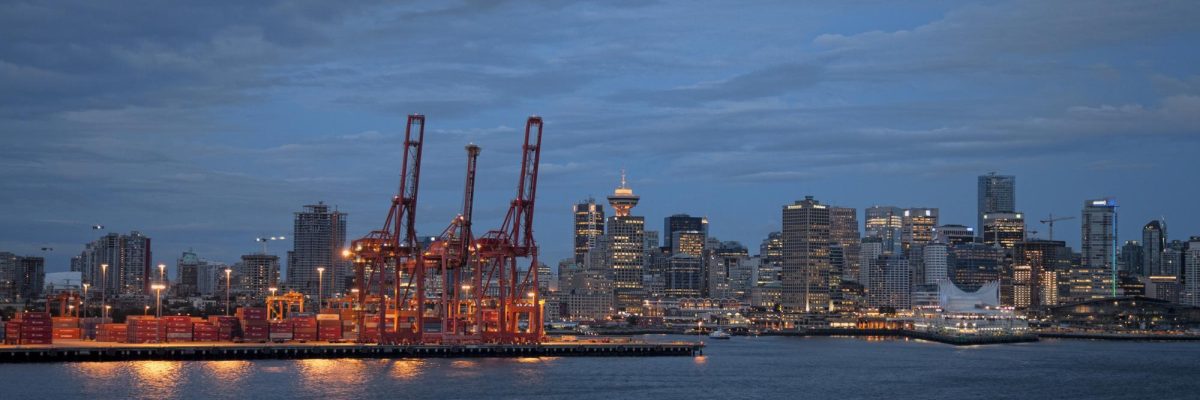
The busiest harbour in Canada is the Port of Vancouver, handling over 140 million tonnes of cargo and millions of containers annually.
Global trade is always evolving
Our system of international trade evolved in the wake of the Second World War. In the late 1940s, 53 countries signed on to the General Agreement on Tariffs and Trade (GATT). The agreement aimed to encourage international trade by reducing barriers such as tariffs. And as trade liberalized, the global economy prospered. Many other trade agreements followed.
- In 1988, Canada and the United States signed a free trade agreement.
- In 1994, the North American Free Trade Agreement between Canada, the United States and Mexico went into effect.
- In 1995, the World Trade Organization (WTO) was formed. It replaced GATT and provided a framework for regulating and facilitating international trade.
In 2001, China joined the WTO. At first, Chinese manufacturers made mostly simple, low-cost goods. But today, they make complex products, such as aircraft and electric vehicles. Chinese manufacturers now compete directly with manufacturers in Canada, Europe and the United States. China’s rise has been a major shift for the global economy. China now accounts for about a third of global manufacturing, and as its manufacturing sector has grown, the share of global manufacturing done in advanced economies like Canada’s has declined.
As a result, countries such as the United States are using tariffs to encourage more manufacturing at home. Since the United States first imposed wide-ranging tariffs on China in 2018, its imports from China have fallen dramatically. But with wide-ranging US tariffs no longer limited to China, the global economy is facing more change as it adjusts to new trade patterns.
As the global economy adjusts, Canada is one piece of a much larger picture. Even in the face of US tariffs, Canada has been tariffed less than many other countries, giving us an advantage in accessing the US market, relative to other countries. This could help some Canadian companies win US business from international competitors. At the same time, tariffs still hurt many Canadian firms and weigh on the economy overall.
This article is part of a series on how changes in technology, demographics and international trade are transforming the Canadian economy. The Bank of Canada can’t offset the effects of these changes. But by keeping inflation low, stable and predictable, we can support the economy as it adjusts.
We want to hear from you
Comment or suggestion? Fill out this form.
Questions? Contact us.