
The Bank of Canada published its Reconciliation Action Plan (RAP) in the autumn of 2024. The plan sets out the journey to deepen our understanding of Indigenous economies in Canada and build a culture at the Bank that is equitable and inclusive of Indigenous Peoples.
Part of our Reconciliation journey includes our commitment to provide an annual update on how the Bank is listening, learning and taking action. As of January 2026, we have started over 75% of the projects supporting the plan’s five goals and have completed almost 15% of them.
We recognize that our progress is measured not only by what we do, but on how we build relationships with our partners and communities, and how we learn about the world around us. True progress comes from turning our daily commitment into meaningful change.
Deepening our understanding of Indigenous economies in Canada
Taking time to learn about Indigenous economic issues
As part of our Economic and Financial Research autumn seminar series, we invited Dr. Robert Gillezeau, Assistant Professor of Economic Analysis and Policy, University of Toronto, and Dr. Donn Feir, Professor of Economics, University of Victoria, to present the research they prepared with their co-authors. Dr. Gillezeau’s research focused on historical treaties, property rights and economic development, and Dr. Feir’s research focused on understanding the unequal costs Indigenous Peoples face in homeownership. The seminars deepened our collective knowledge of Indigenous economic and financial issues.

Sweetgrass represents the relationships between the Bank and Indigenous communities, and the ways in which Indigenous knowledges are braided into the Bank’s work.
Connecting with other central banks to share knowledge
To foster ongoing dialogue on Reconciliation across central banks, the Bank of Canada participates in the Central Bank Network for Indigenous Inclusion. Established in 2021 by the Bank of Canada, Te Pūtea Matua (Reserve Bank of New Zealand), the Reserve Bank of Australia and the US Federal Reserve, the network provides central bank staff with regular opportunities to learn from each other and share best practices on Indigenous financial inclusion and economic reconciliation. We invite Indigenous partners to participate in meetings throughout the year. In 2025, we participated in the bi-annual symposium hosted by the RBA which ensures central banks hear firsthand Indigenous perspectives on key issues such as integrating Indigenous perspectives into policy‑making and improving our understanding of Indigenous economics and labour market outcomes.
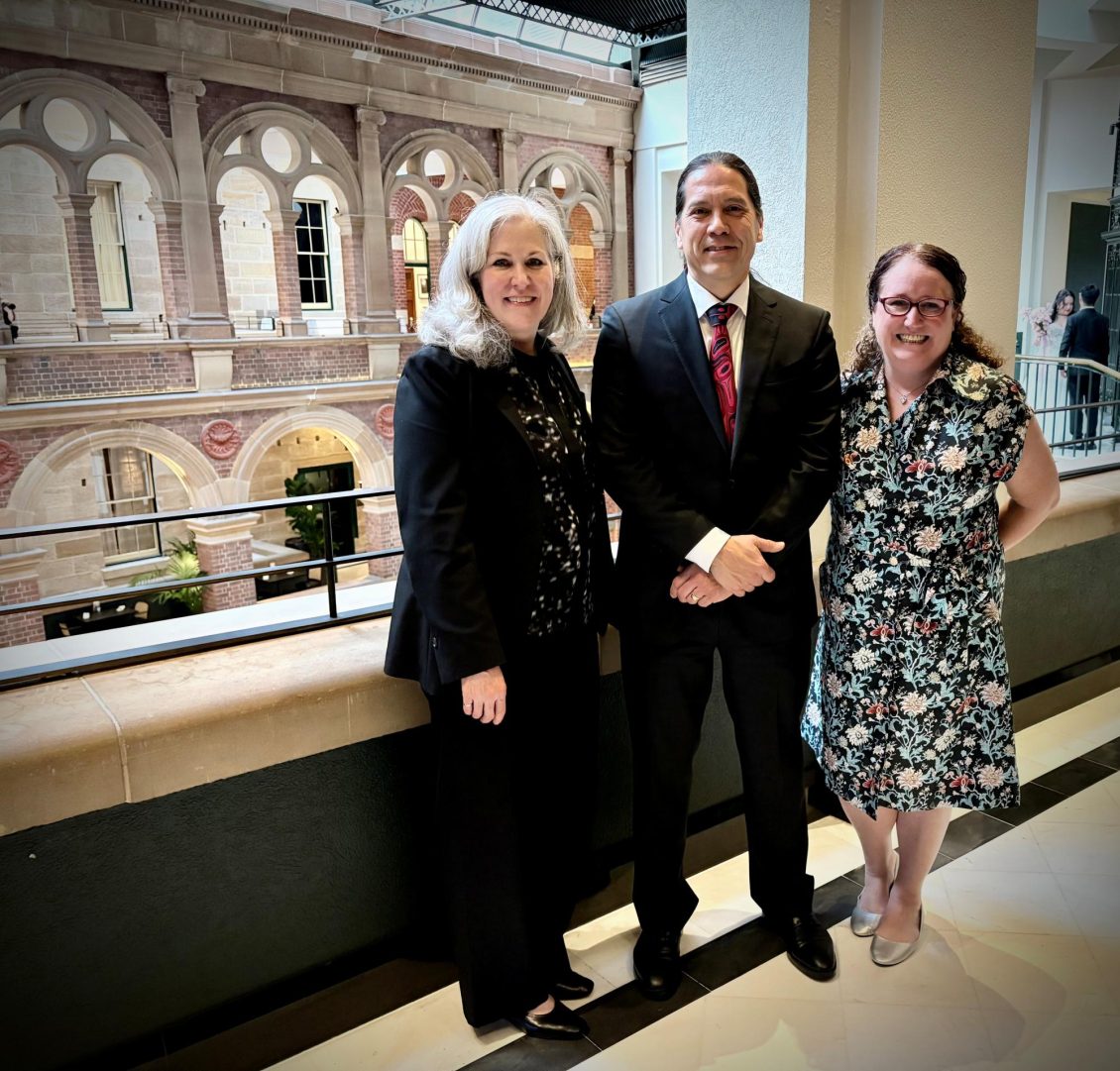
Bank of Canada representatives Maureen Carroll (left) and Stephanie Richardson (right) attend the central bank symposium alongside Bill Lomax, President and CEO of First Nations Bank of Canada (centre).
Sharing experiences of the Indigenous Advisory Circle
“My life experience has been mainly that money is funny—not funny ha-ha, but funny strange—and that there is nothing like money, even just talking about it, that brings out the worst in people. Having already seen how difficult reconciliation action plans are to create and implement, I wondered whether the work of the Bank’s Indigenous Advisory Circle (IAC) would end up being performative. I wondered if the IAC’s work on representation of Indigenous Peoples on future bank notes and guidance for the Bank of Canada Museum on its collections, programs and exhibitions would be authentic. I hesitated to join… Today, as a member of the IAC, I see consistency in the support of staff members and the inclusion of visiting Elders. I see our own willingness as a Circle to listen, to engage, to see differing opinions and unpack issues, as a formidable strength. This increases our ability to imagine creative solutions to the task of ensuring the visibility of Indigenous Peoples on Canadian currency and in the activities of the Bank of Canada Museum, particularly for young people. Nothing about us without us.”
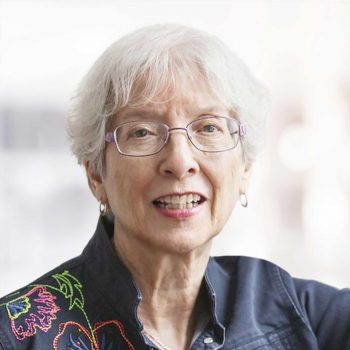
Marie-Louise Perron reflects on her experience as a member of the Indigenous Advisory Circle.
Photo: Richard Dufault 2024
Building an equitable and inclusive organizational culture
Reaching our goal to build Indigenous cultural awareness
To deepen our understanding of Indigenous histories and cultures, we committed to making Indigenous cultural awareness training mandatory for all employees. Ninety-four per cent of Bank employees completed the training. We heard from employees that the training opened their eyes and helped equipped them with skills to build a more respectful and inclusive workplace. We continue to collaborate with Indigenous partners to provide meaningful learning opportunities for employees, including multiple sessions of the Kairos Blanket Exercise and activities to strengthen cultural competence.

The feather, ulu, and infinity symbols represent First Nations, Inuit and Métis Peoples.
Building community through Indigenous drumming
We welcomed Indigenous drummers to the Bank when we launched our Reconciliation Action Plan. Our employees shared that it was a powerful experience to hear the drum in the Bank’s head office and learn that it represents the heartbeat of Mother Earth. Interest in the event was so high that, in collaboration with a Bank employee resource group, the drummers joined us again in June to celebrate the summer solstice and National Indigenous History Month. Sitting in a circle and listening to the stories and the sound of the drum reminds us of our responsibility to continue the important work of Truth and Reconciliation.
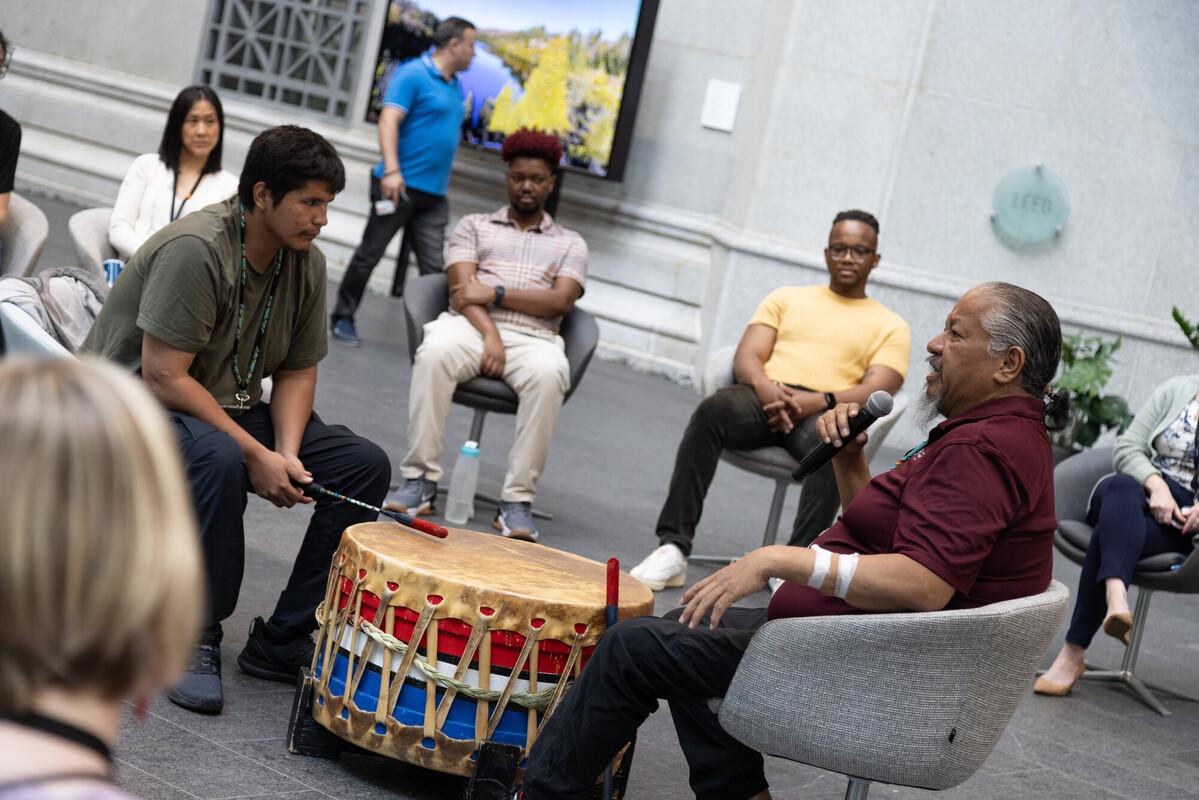
The Ottawa River Singers talk about their relationship to drumming and drum for Bank employees.