Current turbulence in Europe is a reminder that the crisis is not over, but has merely entered a new phase. In a world awash with debt, repairing the balance sheets of banks, households and countries will take years.
As the title of my speech suggests, I would like to discuss the connections between the real economy – the tangible world of jobs, goods and services – and the more intangible world of finance – of money flows, interest rates and the stock market. They have a long and eventful history.
There is an old saying, “Knowledge is gained from experience, and experience is gained from mistakes.” In Canada, we made our mistakes early and often in the 1970s and 1980s. Our fiscal situation deteriorated sharply, inflation surged to double-digit levels, and a few small regional banks collapsed.
We are pleased to appear before this committee today to discuss the Bank of Canada’s views on the economy and our monetary policy stance. Before I take your questions, I would like to give you some of the highlights from our latest Monetary Policy Report, which was released last week.
The global economic recovery is entering a new phase. In advanced economies, temporary factors supporting growth in 2010, such as the inventory cycle and pent-up demand, have largely run their course and fiscal stimulus will shift to fiscal consolidation over the projection horizon.
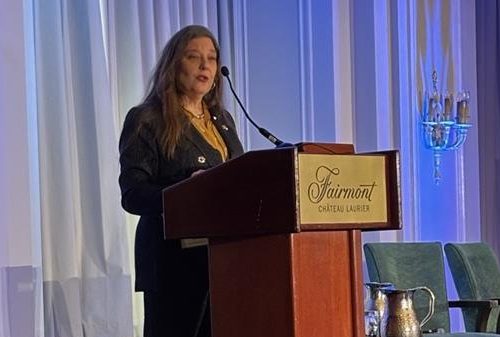
As a native Montrealer, I am particularly pleased to be coming home to deliver my first speech as Senior Deputy Governor of the Bank of Canada.
Insights from financial markets are somewhat fleeting at the moment. A broad range of asset prices from the Canadian dollar to S&P500 futures to European sovereign spreads are unusually correlated and volatile.
Keynes wrote prophetically of the economic consequences of the Treaty of Versailles. Could the same be said of current financial reforms? Are policy-makers taking for granted the essential role performed by finance in a vain pursuit of its risk-proofing?
We are three years into the global financial crisis, and its dynamics still dominate the economic outlook. In particular, broad forces of bank, household, and sovereign deleveraging can be expected to add to the variability and temper the pace of global economic growth in the years ahead.
I am honoured to address members of the Canadian Association for Business Economics. My remarks today will focus on critical issues that the Bank of Canada has studied over the past four years and how this research will inform our work as we move forward post crisis.
The global economic recovery is proceeding but is not yet self-sustaining. A greater emphasis on balance sheet repair by households, banks, and governments in a number of advanced economies is expected to temper the pace of global growth relative to the Bank’s outlook in April.
The recent past has underscored the fact that, in finance and the economy, most things are interconnected on a global scale. Throughout its history, Canada has been powerfully affected by events elsewhere.
From the end of 2008 to the middle of last year, Canada experienced a short, sharp recession. With the exception of government spending, all major components of aggregate demand declined, and industrial production dropped 15 per cent.
From the end of 2008 to the middle of last year, Canada experienced a short, sharp recession. With the exception of government spending, all major components of aggregate demand declined, and industrial production dropped 15 per cent. Canadian exporters suffered particularly, owing to the sharp fall in the components of U.S. economic activity that matter most for Canada.
Given this failure, the G-20’s agenda to reshape the global financial system is comprehensive and radical. The coming weeks and months will be pivotal to its success. The time for debate and discussion is drawing to a close. Policymakers now need to decide and to implement.
At year-end 2009, there were 1.8 billion bank notes in circulation, with a total value of $55.5 billion – approximately $1,630 per Canadian. The Bank of Canada is not responsible for coins. Decisions on coinage rest with the federal government, in particular, the Department of Finance, and with the Royal Canadian Mint.
As the title of the conference suggests, we have seen many boom-and-bust cycles in the commodity sector. This raises one obvious and central question: How can we avoid them in the future?
Good morning, Mr. Chairman and committee members. I am pleased to appear before this committee today to discuss the Bank of Canada’s views on the economy and our monetary policy stance.
Good afternoon, Mr. Chairman and committee members. I am pleased to appear before this committee today to discuss the Bank of Canada’s views on the economy and our monetary policy stance.
Good Morning. I am pleased to be here with you today to discuss the April Monetary Policy Report, which the Bank published this morning.
John Maynard Keynes said the objective of "analysis is … to provide ourselves with an organized and orderly method of thinking out particular problems .… This is the nature of economic thinking."
It is either brave or foolhardy of the Ottawa Economics Association to organize another conference around Canada's perennial challenges of demographics, productivity, and potential growth.
I would like to thank students from universities across Canada for joining me on this special day, the 75th anniversary of the Bank of Canada
Thank you for inviting me here today. It is a pleasure to be with you. This afternoon, I would like to talk about liquidity and the role of the Bank of Canada.
It is a pleasure to be here in Winnipeg. Today, I intend to elaborate on elements of the Bank of Canada's economic outlook.
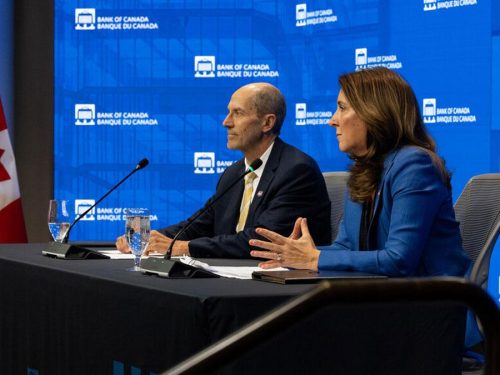
Paul and I are pleased to be here with you today to discuss the January Monetary Policy Report, which we published this morning.
The beginning of a new year is a good time for reflection – a chance to look back over the past 12 months and consider what may lie ahead. Certainly, 2009 saw remarkable economic and financial upheaval around the world, which plunged Canada into a severe recession.